
Email format error
Email cannot be empty
Email already exists
6-20 characters(letters plus numbers only)
The password is inconsistent
Email format error
Email cannot be empty
Email does not exist
6-20 characters(letters plus numbers only)
The password is inconsistent


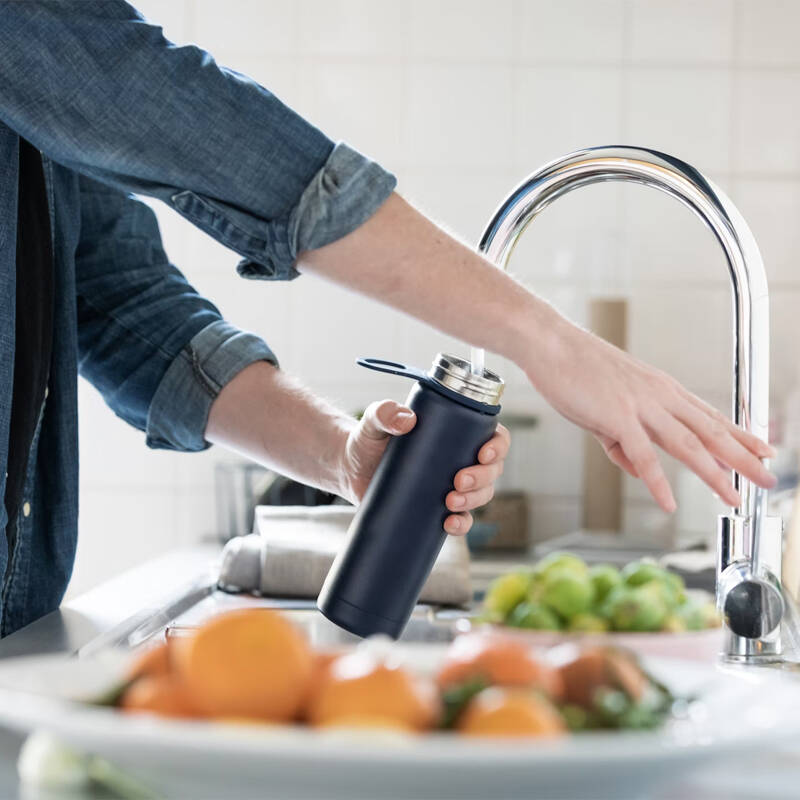
Top Mistakes Buyers Make When Selecting Stainless Steel Water Bottle Wholesale Suppliers
Stainless steel water bottles are no longer a niche product. From gyms to offices, from outdoor hiking to daily commuting, they have become a standard part of modern life. For brand owners, retailers, and corporate procurement managers, finding reliable stainless steel water bottle wholesale suppliers means stable quality, manageable costs, and long-term reputation. But the problem is that this seemingly simple category is filled with "landmines" during the sourcing process.
Many buyers start by asking "how much," but they do not realize that what truly determines success or failure are often the questions they never ask. Below are the five most common fatal mistakes and how to avoid them.
Mistake 1: Only Talk About Price, Never Ask About Material
This is the most common and the most dangerous mistake. Two bottles that look almost identical can have price differences of 30% or more. Where does the difference come from? The core factor is the steel itself.
304 food-grade stainless steel is the industry-recognized safety standard — corrosion-resistant and free from harmful substance migration. But many low-cost suppliers quietly substitute 201 stainless steel. 201 has lower nickel content and costs significantly less, but when in prolonged contact with acidic beverages (such as juice or coffee), it is more prone to rust and may even leach heavy metals. For exports to European and American markets, this is a fatal compliance risk.
How to avoid it: Do not just accept the supplier's verbal promise of "food grade." Require a third-party material test report confirming the steel is 304 or 316. An even more direct method is to use stainless steel test solution on the sample — it will quickly change color on 201 steel, while 304 will show almost no reaction.
Mistake 2: Assuming "Vacuum Insulation" Is a Default Feature and Never Testing It
Many buyers assume that "vacuum insulation" is a fixed attribute of the product and does not require additional verification. This is a very dangerous misunderstanding.
A true vacuum-insulated bottle requires 5 to 6 hours of high-intensity vacuum extraction to achieve 98%–99% vacuum level. Low-cost factories, in order to save electricity and labor costs, may only extract for 2 hours or even skip the process entirely. The finished product looks identical, but the insulation performance is worlds apart. Even worse, once the vacuum seal fails, not only does insulation deteriorate, but the outer wall may also "sweat" or even leak.
How to avoid it: Before placing an order, perform a thermal insulation test on the sample. Fill it with 95°C hot water and measure the temperature after 6 hours. A quality product should remain above 60°C. Any supplier that refuses to provide test data or gives vague answers should be eliminated immediately.
Mistake 3: Ignoring "Inner Wall Electrolysis" and Surface Treatment
Many buyers focus on the external coating color but overlook the treatment of the bottle's interior. Electrolysis treatment forms a dense oxide film on the stainless steel inner wall, making it not only smooth and easy to clean but also preventing corrosion and metallic odors.
Skipping electrolysis treatment is another common "cost-saving" tactic used by low-cost factories. The result is a rough inner wall with welding black spots, and water that tastes like "rust" or metal. Consumers will not want to use it again after just one sip, and your brand reputation will be ruined.
How to avoid it: Shine a flashlight into the inner wall. A quality product should show a uniform mirror-like sheen. If you see spots, dark areas, or blackening around the welds, it indicates missing or substandard electrolysis treatment.
Mistake 4: Blindly Believing "Perfect Sample = Perfect Bulk Order"
This is a classic trap in cross-border sourcing. The sample sent to you by the supplier is often made with the best materials, the best workers, and the most generous time allocation. Once the bulk order is placed, they switch back to "cost mode."
How to avoid it: Do not inspect only once. Arrange a mid-production inspection when production is about one-third to halfway complete. This is the only effective way to prevent factories from switching materials or cutting corners during production. For bottle products, pay special attention to the quality of welds, threading, and sealing rings.
Mistake 5: Underestimating the Value of "Third-Party Inspection"
To save a few hundred dollars in inspection fees, some buyers end up losing tens of thousands of dollars in product value — this is a painful lesson many small and medium buyers have learned. Some factories provide their own "inspection reports," but their credibility is questionable.
SKYLARK fully understands the value of third-party inspection. We not only arrange AQL random inspections before shipment but also proactively intervene during production to help you solve problems before they become disasters.
Conclusion
Sourcing from stainless steel water bottle wholesale suppliers is far more than just comparing prices. Steel grade, vacuum technology, electrolysis treatment, in-process inspection — every link in the chain, if neglected, will eventually turn into customer complaints and refund requests.
We are a sourcing agent specializing in comprehensive product sourcing and export, headquartered in Yiwu. If you want to control quality at the source without being bogged down by tedious order follow-up and inspections, please contact us. Tell us your target market and quality requirements, and we will match you with strictly screened factory resources and provide a clear sourcing proposal.